Från Tågarp till New York
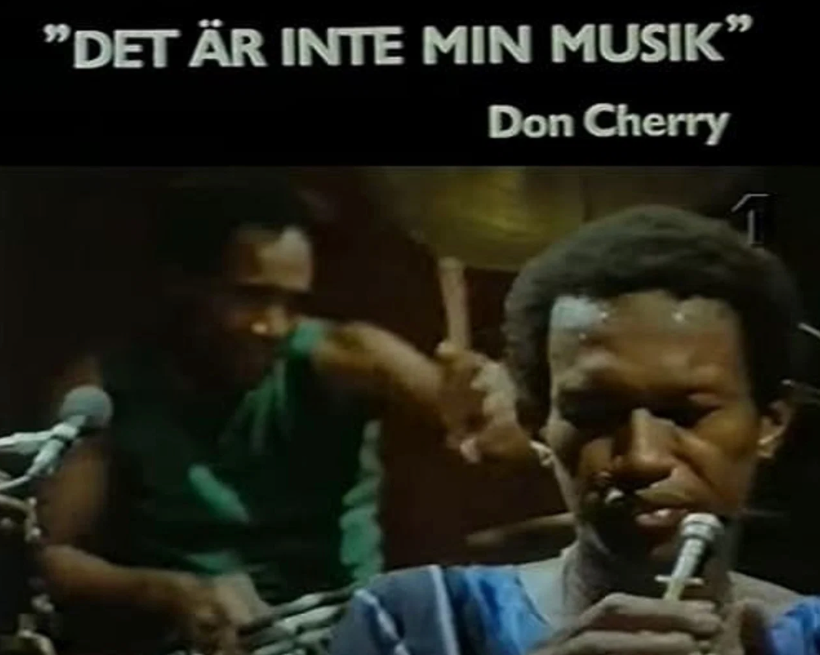
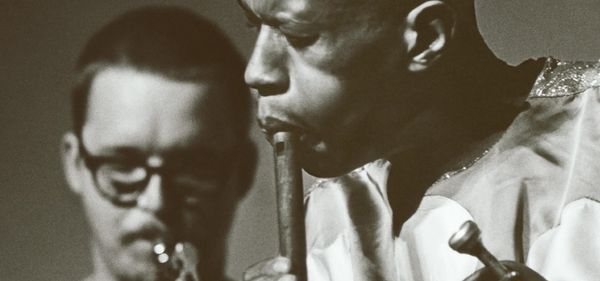
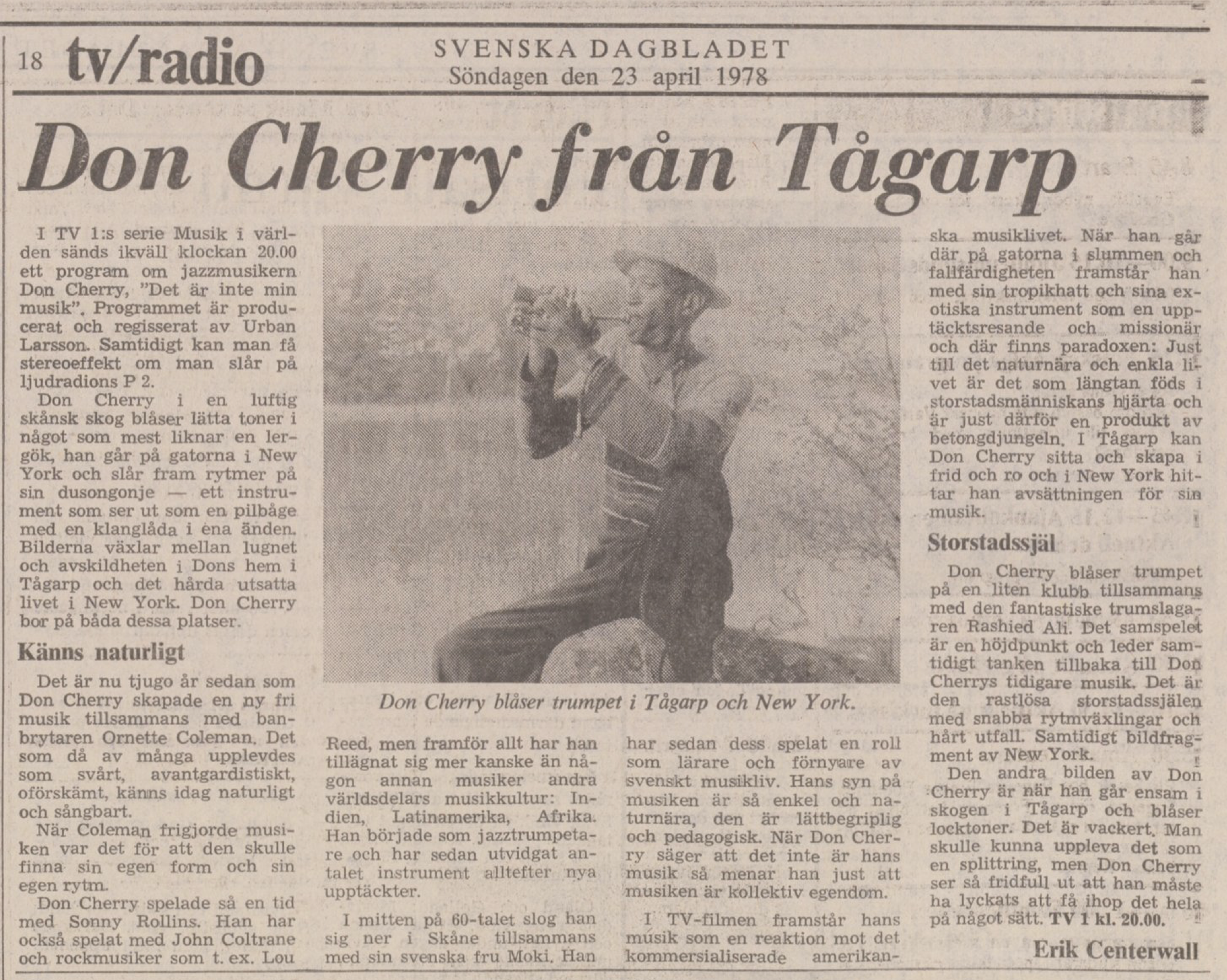
Forty-eight years ago today, the film Det är inte min musik (It's not my music) was shown for the first time on Swedish television. It is a wonderful film made by the filmmaker Urban Lasson. Through a geographical lens, he captures Don Cherry both in the old schoolhouse in Tågarp in southern Sweden and in his family’s loft in the big city of New York. It is the best film ever made about Don Cherry.
This time, the newsletter is both in Swedish and English. In the end there is an interview with Don Cherry, made by Urban Lasson in 1977. Do you like what you’re reading? Please consider a paid subscription.
För ett antal år sedan träffade jag Urban Lasson hemma i hans lägenhet på Södermalm i Stockholm. Detaljerat berättade han om hur filmen gjordes, tog fram pärmar med dokumentation från inspelningstillfällena och hade till och med kvar några av originalintervjuerna han hade gjort med Cherry. Det var en minst sagt givande eftermiddag.
Det är inte min musik spelades in vid två tillfällen. I Tågarp i juni 1977 och sedan i månadsskiftet augusti/september samma år i New York. Med i filmteamet var ljudteknikern Peter Hennix och fotografen Inge Roos som sedan tidigare var bekant med familjen Cherry. Lasson var redan då en erfaren tv-filmare med gjorda konsertfilmer med artister som Elton John och Roxy Music. Och ytterst sällan gjorde han filmer på beställning, istället gjordes de på initiativ av honom själv. Men varför en film om Don Cherry?
– Det var för att Don var Don. Alltså Don stod för en musikvärld som jag tyckte var både spännande och givande. Det handlade om attityder, inte bara hur du förfar med dig själv, utan också om hur du förfar med andra runt omkring dig. Don var en del av livet. Det var "giving", men det var också "contribution". Och det där kan man ju fundera över, de här uttrycken. Och vad de egentligen [betyder], hur de används. Men det är en attityd. Han står för nånting, och det ville jag visa.
– Jag ville berätta om hans musik förstås. Men också ha med det här med de två platserna, det var ju från början sagt att det skulle vara i Sverige, i Tågarp, och att det skulle vara i New York. Så det var ju liksom konceptet. Och hur han existerar på de där platserna.
Urban Lassons film Från Tågarp till New York.
Att spela in film är till viss del som att laga mat, menar han. Det gäller att ha rätt ingredienser. Tystnaden i Tågarp var en sådan ingrediens. Redan klockan fem på morgonen var de ute i skogen för att filma Don när han spelade med fåglarna. "Att det blev så tidigt berodde på att annars hade det låtit för mycket", berättar Lasson. "Jag ville ha den upplevelsen. Det var att lyssna och sedan spela. Och det var viktigt. Det var också viktigt för att så lät det inte riktigt i New York."
I New York ville ha få fram den fysiska miljön. De hittade den bland annat i Soho, ett av stadens gamla industri- och textilområden. 1977 var det fortfarande mycket fysiskt arbete som utfördes där. "Det slamrar och det låter och allt det där. Och det gör det ju också i filmen med avsikt."
– Jag ville att han berättade om sin upplevelse av USA. Vi har på takterrassen där uppe [på loftet som de just hade flyttat in i] också ett snack som leder lite grann till musikindustrin. Det är ingen på djupet-intervju. Det är bara för att man ska beröra de olika områdena som man kan ha att göra med som en presterande, levererande och arbetande person. Och en survivor. Att överleva på olika sätt. Och få det att fungera. Sen var det scener som till exempel med honom och Eagle-Eye som var viktiga. Jag hade velat ha med Neneh också, men hon var en trulig tonåring då. Och var absolut inte intresserad.
Lasson och teamet var i New York ett par veckor. Många scener spelades in, de flesta bestämdes när de väl var på plats.
– Alltså, vi var ju på Williamsburgbron. Vi var nere i stan med Nana Vasconcelos. Vi var förstås på loftet. Det kom musiker från Afghanistan och det är väl med lite grann med dem och det var också någonting som hände där. Det var förberett att vi skulle ha en session. Men inte att det blev just den kombinationen av musiker [med Rashied Ali och James "Blood" Ulmer].
Till en början var det tänkt att Ornette Coleman skulle ha varit med.
– För mig var det en naturlig ingång eftersom det var de två. Jag vet inte hur viktigt det var för Don, men det var det nog. Jag pratade med Ornette på telefon. Men hans värmeelement hade gått sönder. Så av praktiska skäl kunde han inte vara med. Så det blev en kombination. Jag tror att Don tänkte på "Blood" innan, alltså James "Blood" Ulmer. Don var ju en mästare på att få saker att hända omkring sig, att sakerna blev av. Så då blev det den där kombinationen. Som var rätt svår att spela in musikmässigt. För det var ju en typ av överstyrd gitarr, alltså "Blood". Men jag tycker vi ändå lyckades fånga, kunna berätta, av hur det är.
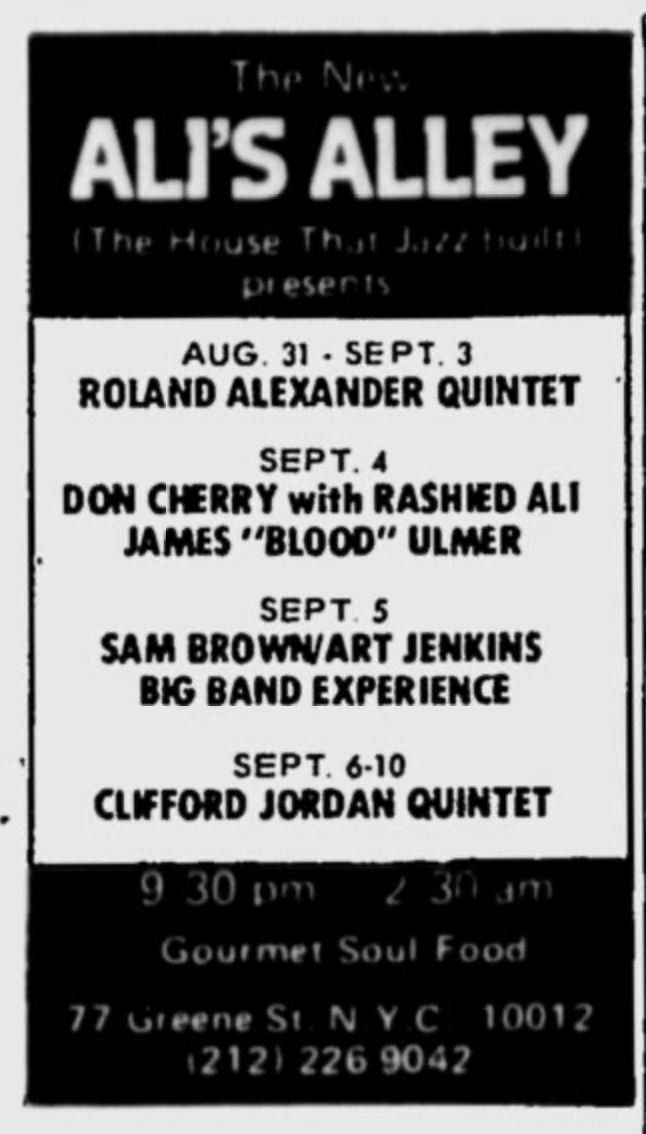
Enligt Urban Lasson filmade de sessionen med Don Cherry, Rashied Ali och James "Blood" Ulmer på eftermiddagen söndagen den 4 september. Med tanke på att konserten annonserades i The Village Voice var giget planerat sedan tidigare. Troligen är det den enda gången de spelade med varandra som trio.
- - - - - -
När jag träffade Urban Lasson fick jag några av de bandade intervjuer han hade gjort med Cherry för filmen. Nedan följer ett utdrag ur en intervju som gjordes i Tågarp sommaren 1977:
Don Cherry, what is a Tågarp attitude and what is a New Yorker's attitude, if there may be such things?
– I mean, (skratt), the Tågarp attitude is like you have to really stay on the case, I mean, if it's winter, we have to really be into the wood. We have to really be into living in survival in every movement. And like when it's summer now, it's more open. You know, when it's spring, then it's having to get the seeds down and be out in the land. See, Tågarp really, the first understanding when we came here was like for it to be, in Tibetan they call it Dharmadhatu, which is like free space.
– And from traveling and having to stay in hotels and having to go to circumstances and conditions where that you can't continue working, we felt that it should be a place where that traveling artists and people can be inspiration for people to come, to visit, to balance themselves and in what they want to do in life. And that's what I mean, the whole essence of what we wanted to have is free space. And to be able to live free and open, you know, because we're in the middle of a triangle, set out here in the middle of space, you know. People ask me in America, oh, how does it feel living in Sweden? And to me, I always say, well, I feel like living in the forest, you know. Okay, I know and feel the environment of Sweden and, you know, the beauties of living in this country. But the actual thing is that we're living in the forest, in the country. And it so happens that Sweden... Sweden is the place that we ended up to live.
– And I think, like, within the few years that we've been here, that there's many things we want to do. And having the concentration of being here to do it is what we've been working toward. And it's been very important, like, if we're going to really feel the compassion, it's as important as I feel that it is for human beings to know of compassion. You know, before, it was always love. The love period, you know, it was love, love. Well, I think now it's compassion. You know, and compassion, like, it's working together with feeling. And to really express that, well, then we have to leave Tågarp to go to be able to try to express that. And it has to be here. When we leave, we want to take Tågarp with us in our hearts, that we can give that as we go and travel. And it's here, we hope. We have many ideas of things to do, that in time is going to happen.
What will you then tell us about New York, the New Yorkers' attitude, if we ask you?
– New York, see, like I've been in New York at times, man, where it was very hard. I mean, really hard, like sleeping on a roof to sleep in here, no place to sleep, no food, trying to make it, playing a place just for meals, you know, and things. Different periods like that. It was very hard. After like we came to New York with Ornette in 59, and we played for one and a half years. And the man made very good, the club owner, where he bought another club but we were still getting the same pay. And we was trying to better our condition as workers. It was a time when you had to have police cards to play. And if you had been in any trouble or anything, they could take your police card away, you know. And it was very hard times. And afterwards, it was even harder.
– And even, I mean, even then, I mean, you feel like New York has some kind of a conscience. I mean, you're going to pay all these dues, and you can't, I mean, there's no place, there was no outlet. And if there was a place where you would play, it would only last for a little while. And we was classed as avant-guardist, so it was like we'd get many hostilities from other musicians and things. Like, okay, but you feel that you must go on, you know. It's not that you'd want to be weird or different. It's just that you feel the energy.
– See, when I was young, I lived next to, in Watts, a man who made this tower. It was an Italian man in the middle of a black neighborhood making a tower. And he made it out of seashells and out of ceramics and different pieces. And he made this and couldn't ask anyone to help him because he didn't know why he was doing it. But he had to do it. And that's the same kind of energy that has been carrying us on. Like when me and Moki, before we were here working with Movement and trying to go from city to city and make happenings and things, we didn't know why we would do it, but we had to do it.
– With Tågarp here and the way it's all come out, it just came out this way, you know. And at the same time, we have certain ideas of things we'd like to do. But from being in New York and the energy of New York, and I have so many friends there, musicians, and we've had so many friends that have died, you know? And something about you're in contact with people, you know it's the whole people thing. Here's the nature, you meet people, but it's not that many people, you know. It's a few million people in Sweden when there's that many people on this little island in Manhattan. So all of that energy and all of you realizing that you're on this island together, you know, that things happen. And young musicians come with energy that gives you energy and you give them exchange in energy and that's what I mean for New York really means to me, I mean it means like many friends in Harlem that having it hard and have always had it hard and always will have it hard and can't leave Harlem, they never would come downtown because, I mean, you're caught into a vicious circle, you know. But I mean it's important to go all these places and see these people when they see you, they're good friends and they feel the energy that you're trying to, or the compassion and it's a closeness.
– And it's like teachers like Ornette Coleman that I must stay close to that lives in New York. And in some kind of way he always said New York is now and that's one of the close things of New York to me is seeing and studying with him. Playing in the streets in New York. I never tried to play for money in the streets, you know, I always just played. And people, you know, put money in or something. But the last few times in New York, it's a place called Soho downtown, which is like a commercial art district now. And I remember it from before how it was factories and things. And I go up in Harlem during the week and play the donso n'goni, and then I go down on Saturdays in Soho and I put a little heart, some coins, to see how much money I could get in a day, you know. And I can make at least $30 a day just playing in the streets like that. And I don't mind being in that situation, you know. And I want to try to keep my life that free that I can be able to go out and be with the people and not let the businessman try to put you on a sand pedestal that's going to crumble and it's all building up your ego so that you could, you know, go in his direction.
– You meet children and it means a lot. I remember when I was young, there was a man that used to do this, that played washboard. His name was Uncle Blue. And Uncle Blue would just walk around and had rags. And he'd play a song on his washboard and sing, you know. And this man was an important, he made an impression in my life, you know, because he was very free. And if you asked him, Uncle Blue, he would play a song, you'd give him a dime, and if you'd give him a quarter, he would show you his money, which he had in bonds. And they'd say, Uncle Blue, what are you going to do with all this money? He says, well, when I come back, then I'll spend it.
– But the most fulfilling thing is like the eyes of the people and the close contact with people, that's something that I really dig, and especially in New York. Because in the summertime, it's a big thing of people playing out in the streets, for survival. And I understand that because I have done that myself in Paris and in New York, having to make the rent, you know. That's an incredible feeling, man, to be where that you really, you go out, you cross this bridge, walk all the way, living in Brooklyn, you cross this bridge, the Williamsburg Bridge, to come into the city, and you know you didn't have no money to catch the train to get there. It's a long bridge. When you get there, you gotta hustle up to make it, you know, to make that rent, and people, that's, I mean, that's another survival, you know, but you gotta do it. You gotta make it. Some kind of way you're gonna make it, and you're trying to keep integrity in your heart, and you don't want to do nothing wrong, you know. You don't want to do any bad karma, so, but you have this so-called faith that everything works out because everybody's trying to give. Give to receive, you know, and that's, I mean, under situations like that, you develop a friendship with people. That's an everlasting friendship.