R.I.P. James "Blood" Ulmer
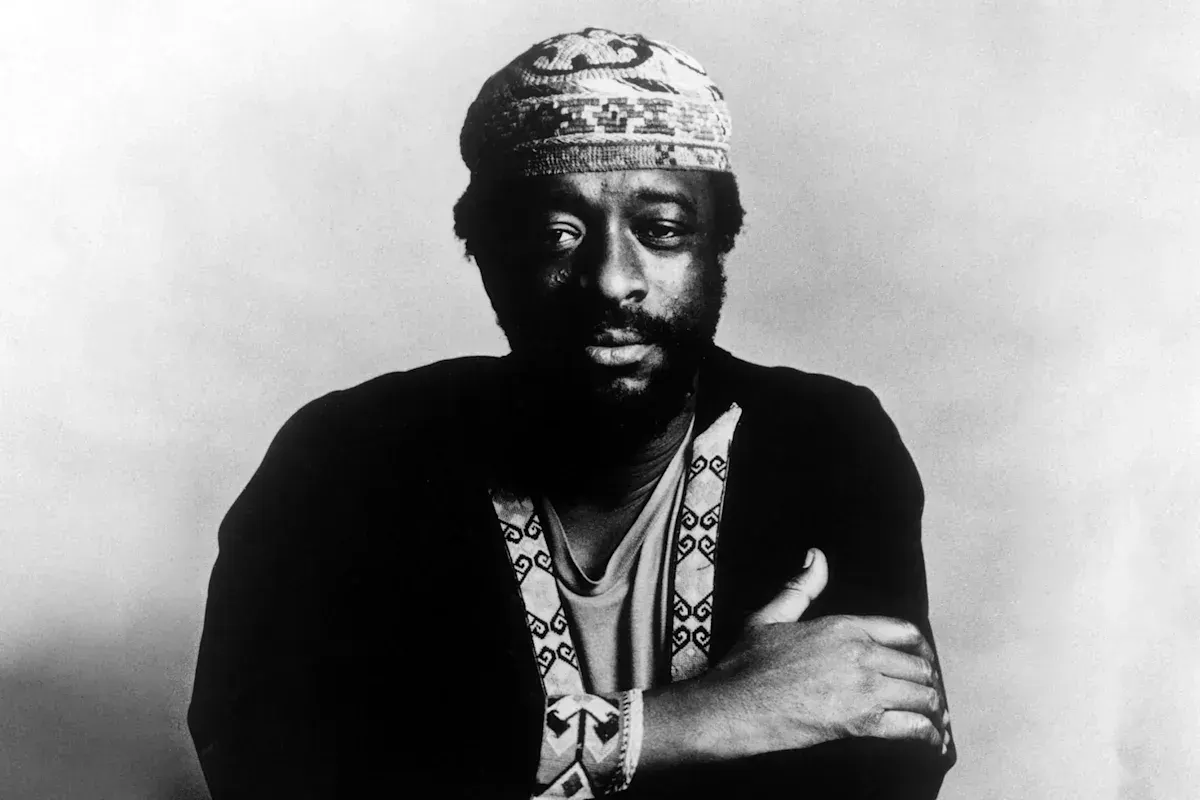
Guitarist James "Blood" Ulmer (1940-2026) has passed away. Involved in the music of Ornette Coleman in the 1970s he also got involved in Don Cherry who was a big inspiration for him. Here comes extracts from an unpublished interview I did with "Blood" in 2014, where he talks about Cherry and the harmolodic theory of Ornette Coleman.
In January 2014 the harmolodic James "Blood" Ulmer visited Stockholm and the jazz club Fasching. That same day I spent some time with him at the hotel where he was staying, just across the street from the club. It became a lovely half an hour, talking about his whereabouts with Don Cherry and also with Eagle-Eye Cherry. He also about his views on the harmolodic theory of Ornette Coleman. June 3 he passed away, at an age of 86. He surely did an impact during his lifetime.
Below follows an excerpt of the interview I did with Ulmer. Not very edited as you will see:
The Swedish television made a film [Det är inte min musik, av Urban Lasson] about Don Cherry in 1977, 1978. In the film you are playing with Rashied Ali and Don Cherry. It's such brilliant music.
– Oh, that's wonderful. Yeah. I've seen a little bit on YouTube. I didn't really see this film. Did they make a film out of it?
Yeah, it's a lovely film. You know he moved to Sweden and lived in the south of Sweden, on the countryside. They bought an old school house.
– Well, that was a while ago. I was at his place. Eagle-Eye was just a little boy then. I met him, Neneh Cherry was 13. Don lived in the forest to me. He's a forest guy. So he had a house in the woods in Sweden. Is it still there, that same one?
Yeah, it's still there. What's so lovely about this film is that it's called From Tågarp, it's the place out in the woods, to New York. So it's pictures from the countryside and from New York and you are playing and... It's a lovely film. And then I was talking to Eagle-Eye and Neneh and they mentioned that you were friends, you and Don.
– Yeah, yeah.
When I saw that you were going to play here in Stockholm I took a chance and mailed. Because I would very much like to hear your views about playing with Don ...
– Well, I have to... Let's see now. When I met Don, he was playing with Coleman, Don and Dewey Redman and Charlie Haden and Billy Higgins. And even Ed Blackwell too was... And Coleman at that time was getting ready to change that band. He wanted to move into another thing. He wanted to start playing with the guitar and whatever. So that was the ending. But I was in that band for a while and I played maybe two or three concerts with that lineup with the guitar. And I know I was very impressed with it because it was the first time I was in a band that had hardcore jazz musicians, I worked with [???] at that time and before, and you know, guitar players didn't really play in bands like that and have a part to play. So that's when I met Don and that particular group.
Do you remember when this was? Was it in...
– In 72 I think. I think in that time. I mean that last gig we played, a big gig in Ann Arbor, Michigan. And it had 30,000 people there. I was so impressed about that gig. It was a whole big festival. B.B. King and everybody was on that festival. So Coleman was on that festival too. That's the first time I was familiar with Don. And then after that Don started liking the way I was playing the guitar. He used to talk about it in the news. Don Cherry said James Blood Ulmer was a boom, boom, boom, boom. I said, oh my goodness. So Don, he was like promoting me. He said, hey, this guy's coming up. He's trying to play something different on the guitar. And then the next day Don hired me to play with him at Rashied Ali's Alley. Now that was really back in the back. And then we did that, and then the next day I knew Don said he was going to make a film and he wanted me and Rashid to play on the film. Don wasn't like a guy who would be hanging out with you and stuff. He would come on. I always thought he was like a genie (laughs).
Like a?
– Like a genie. He would show up in different kind of clothes and he wasn't like a regular street guy, you know what I'm saying? He was just different, man. And played that little damn trumpet like that. I said, wow! He was cool, but I never got personal with him about what he'd do or none of that stuff. I was talking to him on artist things. I always talked about music. I'd see him pass and he would say, yeah, this sounds good. He would stay on the move, Don. He'd move and then I met his children. Neneh first, and then Eagle Eye. I met him [Eagle-Eye] and did some stuff with him, with this Scorsese film... [The Soul of a Man, a 2003 documentary directed by Wim Wenders in the series The Blues, produced by Martin Scorsese]
– And Don Cherry always had something good to say about what was going on and what I was doing. He inspired me much. He inspired me more than even Coleman because Coleman, I would play with him but he never would express what I was sounding like. You know what I'm saying? But Don would always let me know what I was sounding like. He could describe it. He was real passionate. Yeah, and listen to the spiritual quality of the sound. I said, oh my goodness. He could explain everybody's situation real good. You know, it's different when you're playing like new music, you're playing something that you know is not getting in anybody's way. You're playing a music that you're not stepping on nobody's toes. Then you hear something about it. It's really, really, really inspirational. He was always inspirational to me.
The trio with you and Don and Rashid Ali, how much did you play together?
– Well, that was another genie move. That just happened. He already knew how Rashied played. And he already knew what I was playing more than I knew about it. So he got that together for what he was doing.
So it was one time you played together.
– One time. Boom. I said good. He had it all planned out, what he wanted to do. So it was natural. I still watch that thing all the time on YouTube.
But what about Ornette's Coleman's way of harmolodics. How would you explain that, what is harmolodics for you?
– Harmolodics to me is an unwritten theory. It's not a theory that is written down where you can learn it. It's an unwritten music theory. That's my take on harmolodics. It's an unwritten music theory and there ain't no need nobody outside trying to think of it in another way. Sometimes I don't even call it harmolodics. Harmolodic is a theory and the only results you can get out of it, is you have to become a harmolodic person. And a harmolodic person is someone who play harmolodic music. And harmolodic music is an unwritten theory. So it's difficult.
It's a way of, you have to play yourself in?
– Right, right. See, cause even somebody's harmolodic, that means you're on stage, and you're not riding on anyone's back. The bass player, the drummer, the horn player, the guitar player. Everybody is playing independent of each other. What you play don't have anything to do with why I'm playing, but we can play together and be together and that's harmolodic.
It's amazing cause it sounds so fit together.
– Yeah, yeah, yeah. Because no one is using anyone for something. Like in jazz, regular jazz, you got the drummer, and the bass player swinging with the drummer and the horn is riding on this and the piano is guiding this, you know. But we don't have that. We don't have chord changes and scales and sequences to follow or got to do. So it's a whole another thing. I mean it's an unwritten music theory. Unwritten.
 Magnus Nygren
Do you like this newsletter? Feel free to subscribe or to donate. It would be of much help.